The official lists say “water, food, a flashlight”. This one says how much and which kind.
Three gallons of water per person. A headlamp that takes AAA cells. A battery radio that picks up NOAA weather alerts. Three days of food for about $17 an adult.
It starts with six jobs that cost nothing, because those matter more than anything you can buy.
Water
- 3 gallons of sealed water per person
- Plain unscented bleach and a dropper
- One 5-gallon collapsible carrier
Light and power
- Headlamp per person and one LED lantern. No candles
- One branded 20,000 mAh power bank
Information
- Battery radio with the NOAA weather band and alert
- Printed household plan and phone list
Money and documents
- About $100 per adult in small bills
- Paper copies of ID and insurance
Plus food, health and hygiene, safety and the go bag, and the numbers to write down.
Why households are doing this now
How long the average US electricity customer went without power in 2024, the most in a decade. Three hurricanes accounted for 80% of it.
Source: US Energy Information Administration
How long Asheville, North Carolina went without clean tap water after Hurricane Helene in 2024.
Source: National Hurricane Center
US adults who told FEMA they felt prepared for a disaster. Fewer than half had put supplies together or made a plan.
Source: FEMA National Household Survey, 2023
This is not a prepper manual
No bunkers, no scare stories, no ration buckets. Most outages last a few hours. This is for the storm, freeze or fire that lasts days: a slightly deeper pantry, a flashlight that works and a page of phone numbers.
We say what not to buy as plainly as what to buy. Most of the list comes from a grocery store.
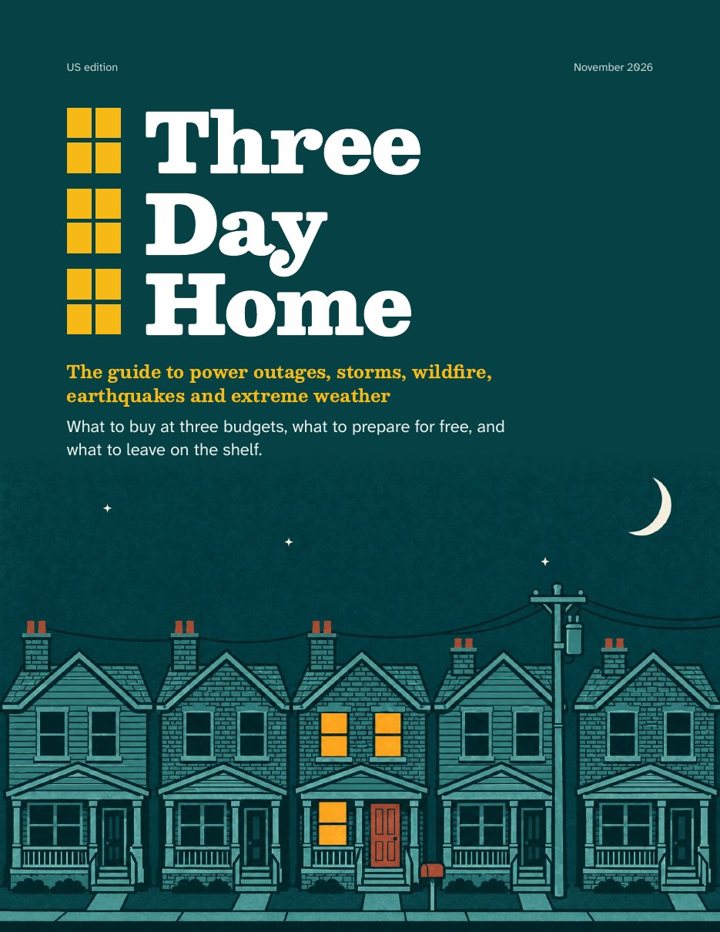
When three days is not enough: The Three Day Home Guide
The checklist covers three days. The 66-page guide takes a household to two weeks, at three budgets, with a chapter for each major US hazard and a kit list kept up to date online.
- A complete shopping list with specifications, example products and price ranges
- How to size a power station or generator for internet, a refrigerator or medical equipment
- Hurricanes, floods, tornadoes, wildfire and smoke, earthquakes, winter storms and extreme heat
- Print-out playbooks for a power outage, a boil water advisory, a network failure and an evacuation order
$24. Checklist subscribers get it for $17 in launch week.
Start with the free checklistQuestions
Is this official government advice?
No. Three Day Home is independent and is not affiliated with FEMA or the American Red Cross. The checklist follows their published kit lists and adds quantities, specifications and prices. We name our sources so you can check them.
What will you email me?
The checklist straight away, then a short series over a week or so on power, water and communications. Some emails mention our paid guide. Every email has an unsubscribe link.
Do you earn money from product links?
Some links on the kit list are affiliate links, and each one is labeled. They never decide what we recommend. The checklist and the guide contain none.
Do I need to spend a lot?
No. The first six jobs are free, and the three-day kit is about $140 to $230 per adult from scratch, mostly grocery-store food, bottled water and a handful of inexpensive items.